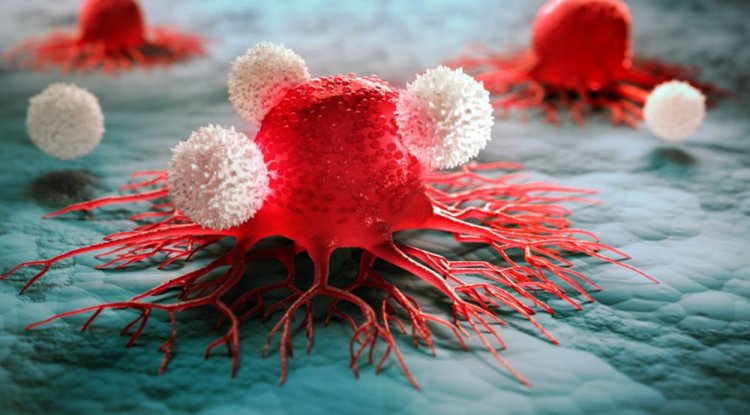
Breast Cancer: A Detailed Guide

Cancer develops when changes in genes that control cell development, known as mutations, occur. Mutations allow cells to divide and multiply in an uncontrollable manner.
Breast cancer is a type of cancer that arises in the cells of the breast. The cancer usually develops in the lobules or ducts of the breast.
The glands that create milk are known as lobules, and the ducts that transport the milk from the glands to the nipple are known as ducts. Breast cancer can also develop in the fatty tissue or fibrous connective tissue.
Uncontrolled cancer cells frequently penetrate healthy breast tissue and can spread to lymph nodes beneath the arms. Once the cancer has entered the lymph nodes, it has a pathway to spread to other regions of the body.
Signs & Symptoms of Breast Cancer
Breast cancer may not generate any symptoms in its early stages. Although a tumour may be too small to be felt, a mammography might nevertheless reveal an anomaly.
The first sign of a tumour is usually a new lump in the breast that wasn't there before. Not all lumps, however, are cancerous.
Breast cancer can manifest itself in a variety of ways. Although many of these symptoms are similar, some are distinct. The following are symptoms of the most frequent breast cancers:
- a new lump or bulge in the breast that feels distinct from the surrounding tissue
- breast discomfort
- Breast skin that is reddened or discoloured, with pits
- All or portion of your breasts are swollen
- a secretion from the nipple that isn't breast milk
- your nipple has a bloody discharge
- Skin on your nipple or breast is peeling, scaling, or flaking.
- a rapid, inexplicable change in your breast shape or size
- nipple inverted
- alterations in the appearance of your breasts' skin
- a bulge or bump under your arm
It's not always the case that having any of these symptoms means you have breast cancer. A benign cyst, for example, can produce pain in your breast or a lump in your breast.
If you discover a lump in your breast or experience other symptoms, see your doctor for a thorough examination and testing.
Breast cancer types
Breast cancer is divided into two types: invasive and noninvasive. There are various varieties of breast cancer. Breast cancer in situ is another term for noninvasive breast cancer.
Noninvasive cancer has not expanded from the initial tissue, whereas invasive cancer has spread from the breast ducts or glands to other areas of the breast.
The most prevalent kinds of breast cancer are divided into these two categories, which include:
In situ ductal carcinoma. DCIS (ductal carcinoma in situ) is a noninvasive cancer. DCIS means the cancer cells in your breast are contained to the ducts and haven't spread to the surrounding tissue.
In situ lobular cancer. Lobular carcinoma in situ (LCIS) is a type of breast cancer that develops in the milk-producing glands. The cancer cells haven't penetrated the surrounding tissue, unlike DCIS.
Invasive ductal carcinoma is a type of cancer that spreads throughout the body. The most frequent type of breast cancer is invasive ductal carcinoma (IDC). This type of breast cancer starts in the milk ducts of your breast and then spreads to adjacent tissue in the breast. Breast cancer that has progressed outside of your milk ducts has the potential to spread to other surrounding organs and tissue.
Invasive lobular carcinoma is a type of cancer that spreads throughout the body. Invasive lobular carcinoma (ILC) begins in the lobules of your breast and spreads to adjacent tissue.
Other kinds of breast cancer that are less prevalent include:
Paget's disease is a nipple illness. This type of breast cancer starts in the nipple ducts, but as it progresses, it spreads to the skin and areola of the nipple.
Tumor of the Phyllodes. This extremely rare kind of breast cancer develops in the breast's connective tissue. The majority of these tumors are harmless, but a few are malignant.
Angiosarcoma. This is a type of breast cancer that develops in the blood vessels or lymph vessels.
Your cancer kind influences your treatment options and long-term prognosis.
Inflammatory breast cancer
Inflammatory breast cancer (IBC) is a kind of breast cancer that is uncommon but deadly. IBC accounts for only 1 to 5% of all breast cancer instances, according to the National Cancer Institute (NCI).
Cells in the lymph nodes around the breasts get clogged, preventing the lymph veins in the breast from draining normally. IBC causes your breast to enlarge, look red, and feel very heated, rather than forming a tumor. Your breasts may resemble an orange peel, with pits and thickening.
IBC is a fast-moving disease that can be quite aggressive. As a result, if you detect any symptoms, you should call your doctor right soon.
Triple-negative breast cancer
Another rare illness is triple-negative breast cancer. According to the American Cancer Society, it affects only approximately 10% to 15% of people with breast cancer (ACS).
A tumor must exhibit all three of the following features to be classified as triple-negative breast cancer:
- It is devoid of estrogen receptors. These are cell receptors that bind to the hormone estrogen and adhere to it. Estrogen can encourage cancer growth if a tumor possesses estrogen receptors.
- It is devoid of progesterone receptors. Cells that attach to the hormone progesterone are known as progesterone receptors. Progesterone can accelerate cancer growth if the tumor possesses progesterone receptors.
- Its surface is devoid of extra human epidermal growth factor receptor 2 (HER2) proteins. HER2 is a protein that promotes the growth of breast cancer.
Triple-negative breast cancer is defined as a tumor that fits all three criteria. This type of breast cancer has a faster rate of growth and dissemination than other types of breast cancer.
Because hormone therapy for breast cancer is ineffective, triple-negative breast cancers are difficult to treat.
Stages of breast cancer
Breast cancer is classified into phases based on the size of the tumour and the extent to which it has spread.
Tumors that are large or have spread to surrounding tissues or organs are in a more advanced stage than cancers that are tiny or limited in the breast. Doctors need to know the following information to properly stage breast cancer:
- whether the cancer is invasive or not
- the size of the tumour
- whether there are any lymph nodes involved
- if cancer has spread to surrounding organs or tissue
- Stages 0 to 4 are the five primary stages of breast cancer.
Stage Breast Cancer
DCIS is the first stage. DCIS cancer cells are restricted to the breast ducts and have not migrated to adjacent tissue.
Stage 1 Breast cancer
1st stage. The primary tumor is no more than 2 centimeters (cm) in diameter. The lymph nodes aren't harmed in any way.
1B is the second stage. Cancer has been discovered in adjacent lymph nodes. Either there is no tumor in the breast or it is less than 2 cm in diameter.
Stage2 breast cancer
Stage 2A is the second stage. The tumor is less than 2 cm in diameter and has spread to one to three surrounding lymph nodes, or it is between 2 and 5 cm in diameter but has not migrated to any lymph nodes.
2nd stage (B). The tumor is between 2 and 5 cm in diameter and has spread to 1 to 3 axillary (armpit) lymph nodes, or it is greater than 5 cm in diameter but has not migrated to any lymph nodes.
Stage3 Breast cancer
Stage 3A.
The malignancy has progressed to 4 to 9 axillary lymph nodes, or the internal mammary lymph nodes have expanded. The size of the initial tumour is unimportant.
Tumors that are more than 5 cm in diameter. The malignancy has spread to one to three axillary lymph nodes, as well as any nodes in the breastbone.
A tumor has entered the chest wall or skin, and may or may not have invaded up to nine lymph nodes at this stage.
Stage 4 Breast Cancer
Breast cancer in stage 4 (metastatic breast cancer)
A tumour in stage 4 breast cancer can be any size. Its cancer cells have spread to local and faraway lymph nodes, as well as faraway organs.
Your doctor's tests will establish the stage of your breast cancer, which will influence your treatment options.
Learn about the various stages of breast cancer and how they are treated.
Survival rate for women with breast cancer
Breast cancer survival rates vary dramatically depending on a variety of factors.
The type of cancer you have and the stage of cancer at the time of diagnosis are two of the most crucial aspects. Other elements that could have an impact include:
- your age
- your sexual orientation
- your nationality
- the cancer's rate of progression
According to research by 2021Trusted Source, individuals of colour with breast cancer diagnosis had a greater mortality rate than white people. Healthcare inequities could be one cause for this.
The good news is that survival rates for breast cancer are improving.
According to the ACS, the 5-year survival rate for women with breast cancer was 75.2 percent in 1975. It was 90.6 percent for women diagnosed between 2008 and 2014.
Breast cancer 5-year survival rates vary based on the stage of diagnosis. They range from 99 percent for early-stage tumors that are locally contained to 27 percent for late metastatic tumors.
Learn more about the statistics of survival and the factors that influence them.
Diagnosis of breast cancer
In addition to a breast exam, your doctor will conduct a full physical examination to establish whether your symptoms are caused by breast cancer or a benign breast ailment. They may also order one or more diagnostic tests to determine the source of your symptoms.
The following tests can assist your doctor in diagnosing breast cancer:
- An imaging test called a mammography is the most common approach to view beneath the surface of your breast. Many women in their forties and fifties receive mammograms every year to screen for breast cancer. A mammogram will be requested if your doctor feels you have a tumor or worrisome area. If your mammography reveals an unusual spot, your doctor may order additional tests.
- A breast ultrasound creates a picture of the tissues deep within your breast using sound waves. Your doctor can use an ultrasound to tell the difference between a solid mass, such as a tumor, and a benign cyst.
Breast biopsy
A breast biopsy may be performed if your doctor suspects breast cancer based on testing such as a mammogram or an ultrasound.
Your doctor will take a tissue sample from the questionable location to be analysed during this procedure.
Breast biopsies come in a variety of shapes and sizes. Your doctor may take a tissue sample with a needle in some of these tests. They make an incision in your breast and then remove the sample with others.
The tissue sample will be sent to a laboratory by your doctor. If the sample is positive for cancer, the lab can run additional tests to determine the sort of cancer you have.
Breast Cancer Treatment
The stage of your breast cancer, how far it has spread (if it has), and the size of the tumor all play a role in determining the type of treatment you'll need.
To begin, your doctor will establish the size, stage, and grade of your cancer. The grade of your cancer indicates how probable it is to grow and spread. Following that, you can talk about your therapy options.
The most common therapy for breast cancer is surgery. Chemotherapy, targeted therapy, radiation, and hormone therapy are all options for many people.
Surgery
Breast cancer can be removed using a variety of surgical procedures, including:
- The tumour and some surrounding tissue are removed during this treatment, while the remainder of the breast is left intact.
- Mastectomy. A surgeon removes an entire breast in this surgery. In a double mastectomy, both breasts are removed
- Biopsy of the sentinel node A few lymph nodes that receive drainage from the tumour are removed during this procedure. The lymph nodes in question will be examined. You may not require more surgery to remove more lymph nodes if they don't have cancer.
- Dissection of the axillary lymph nodes. If cancer cells are found in lymph nodes taken during a sentinel node biopsy, your doctor may remove further lymph nodes.
- Prophylactic mastectomy on the contralateral side. Despite the fact that breast cancer may only be found in one breast, some women choose to have a contralateral preventive mastectomy. This procedure eliminates your good breast in order to reduce your chances of getting breast cancer again.
Radiation therapy
High-powered beams of radiation are used in radiation therapy to target and kill cancer cells. External beam radiation is used in the majority of radiation treatments. A huge machine is attached to the outside of the body in this approach.
Doctors may now irradiate cancer from within the body thanks to advancements in cancer treatment. This sort of radiation treatment is known as brachytherapy, according to Breastcancer.org.
During brachytherapy, doctors implant radioactive seeds, or pellets, near the tumour site inside the body. The seeds are only present for a brief time and function to eliminate cancer cells.
Chemotherapy
Chemotherapy is a type of medicine that is used to kill cancer cells. Chemotherapy may be used alone in some cases, but it is frequently used in conjunction with other treatments, particularly surgery
Some people will have surgery first, then other therapies like chemo or radiation. Adjuvant therapy is the term for this type of treatment. Others may have neoadjuvant therapy, which is chemotherapy followed by surgery to reduce the cancer.
Doctors may prefer to administer chemotherapy prior to surgery in some circumstances. The goal is that the treatment may decrease the tumor, reducing the need for invasive surgery.
Chemotherapy includes a lot of unfavorable side effects, so talk to your doctor about them before you start.
Hormone therapy
Your doctor may start hormone therapy if your kind of breast cancer is hormone-sensitive. Two female hormones, estrogen and progesterone, can promote the formation of breast cancer tumors.
Hormone treatment works by inhibiting the synthesis of these hormones in your body or by inhibiting the hormone receptors on cancer cells. This action may help delay or perhaps stop the progression of your cancer.
What's Your Reaction?